
Cold Weather Tips for Your EV

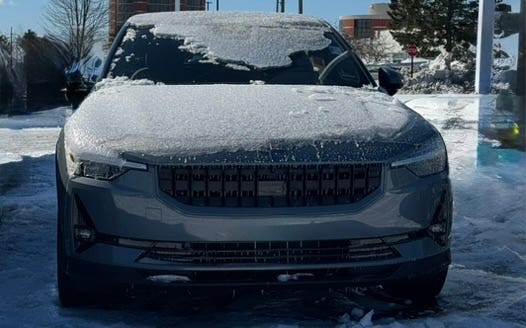
With the temperature about 0F this morning in my area it got me thinking again about using an EV in cold weather. I don’t know about you, but I often hear from uninformed folks that EVs are “no good in the cold”.
Obviously that is false, but like with any vehicle, you do have to know how to deal with extreme cold.
Range
Yes, the range (or more precisely, efficiency) drops in cold weather. To help mitigate this, keep your vehicle plugged in to an AC charger if you can. I recommend setting the maximum charge level to 100% if you know you will be driving soon (in the next day or so), otherwise up to 90% is fine.
As an example of reduced efficiency, here are some stats from a recent drive I my Polestar 2 where the outside temperature was about 15F.
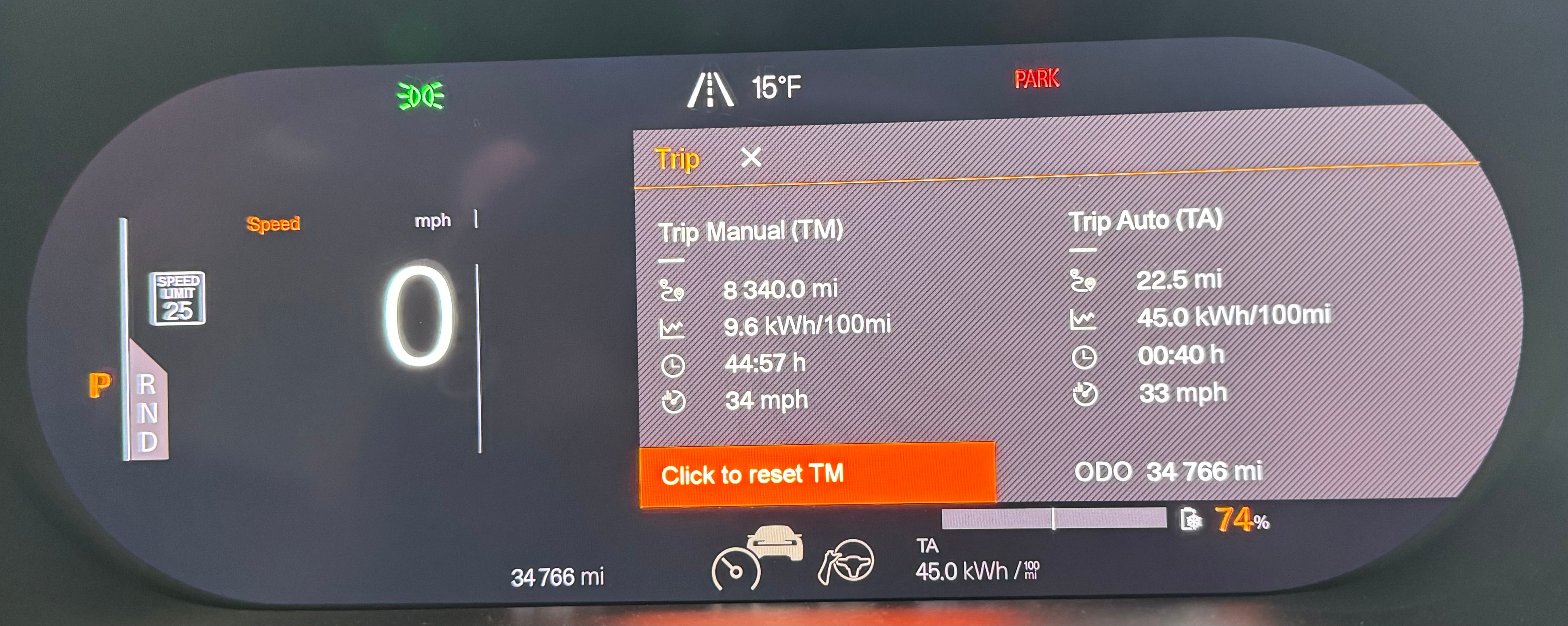
45kWh/100mi (2.2mi/kWh) is pretty bad efficiency. That is about as low as I’ve seen and translates to a maximum range of 165 miles. In the summer I have seen it as high as 3.9mi/kWh.
Battery Pre-Conditioning
If your EV offers it, take advantage of battery pre-conditioning while the car is plugged in to warm the battery. Batteries are not as efficient in the cold, but warming them up helps greatly. By using AC to pre-warm the battery it is more efficient on the drive, which will give you a bit more range.
With my Polestar 2, pre-conditioning is available when you set a departure time in the climate settings of the app or infotainment.
If you are on a road trip and need to stop at a DC fast charger, you will definitely want to make sure your battery is warmed up, otherwise charging speeds will be slower than you’ll like. Many cars will automatically pre-condition the battery if you use the built-in navigation to route to a DC charger so that it is warm to DC fast charge at acceptable speeds. Some EVs also have a manual way to pre-condition the battery, usually with an option in the infotainment system1.
Pre-Heat the Cabin
You might want to pre-heat the cabin so that the car is roasty-toasty when you’re ready to leave. If you do this when the car is plugged in, it uses AC power for this rather than battery, saving you a little juice at the start of your journey.
Nothing beats starting out with a nice, warm car. And because this is an EV you can do this pre-heating while the car is in the garage with the door closed!
Starting with a pre-heated car means that the car will spend a little less energy while driving.
Staying Warm While Driving
Be sure to take advantage of seat and steering wheel warmers! Heating the seats and steering wheel is much more efficient than heating the entire cabin. Also, consider lowering the cabin temperature slightly, which is probably a good idea anyway since you’ll likely be wearing a coat. I use 68F in the winter and 72F in the summer.
Tire Pressure
Be sure to check your tire pressure regularly, especially when temperatures drop dramatically. When the temperature drops, so does tire pressure. Low tire pressure lowers efficiency and range. And if things get too low, you are at risk of damaging the tires.
Fortunately most EVs have a tire pressure monitoring system of some kind, but they still might not warn you of a pressure drop soon enough.
Windshield Washer Fluid
Eventually the temperature will warm up and any snow will melt. Melting snow and water gets splashed up onto your windshield from other cars so you may find you use the washer often. Keep an eye on the fluid level and when you refill it, be sure to purchase a fluid that is good for low temperatures. Don’t just use water!
Tires
Do not drive on summer tires when temperatures drop below freezing! The rubber on those tires is too hard and won’t provide much traction in the cold, even on dry roads. Plus, they’ll be atrocious if there is any snow or slush. Summer tires + winter = crash. If you only have summer tires, stay home in cold or bad weather.
Depending on where you live, all-season tires might be a good year-round option, but those are also not really great in most snow conditions. All-weather tires, or even snow tires, might be a better option depending on how much snow you regularly have to deal with.
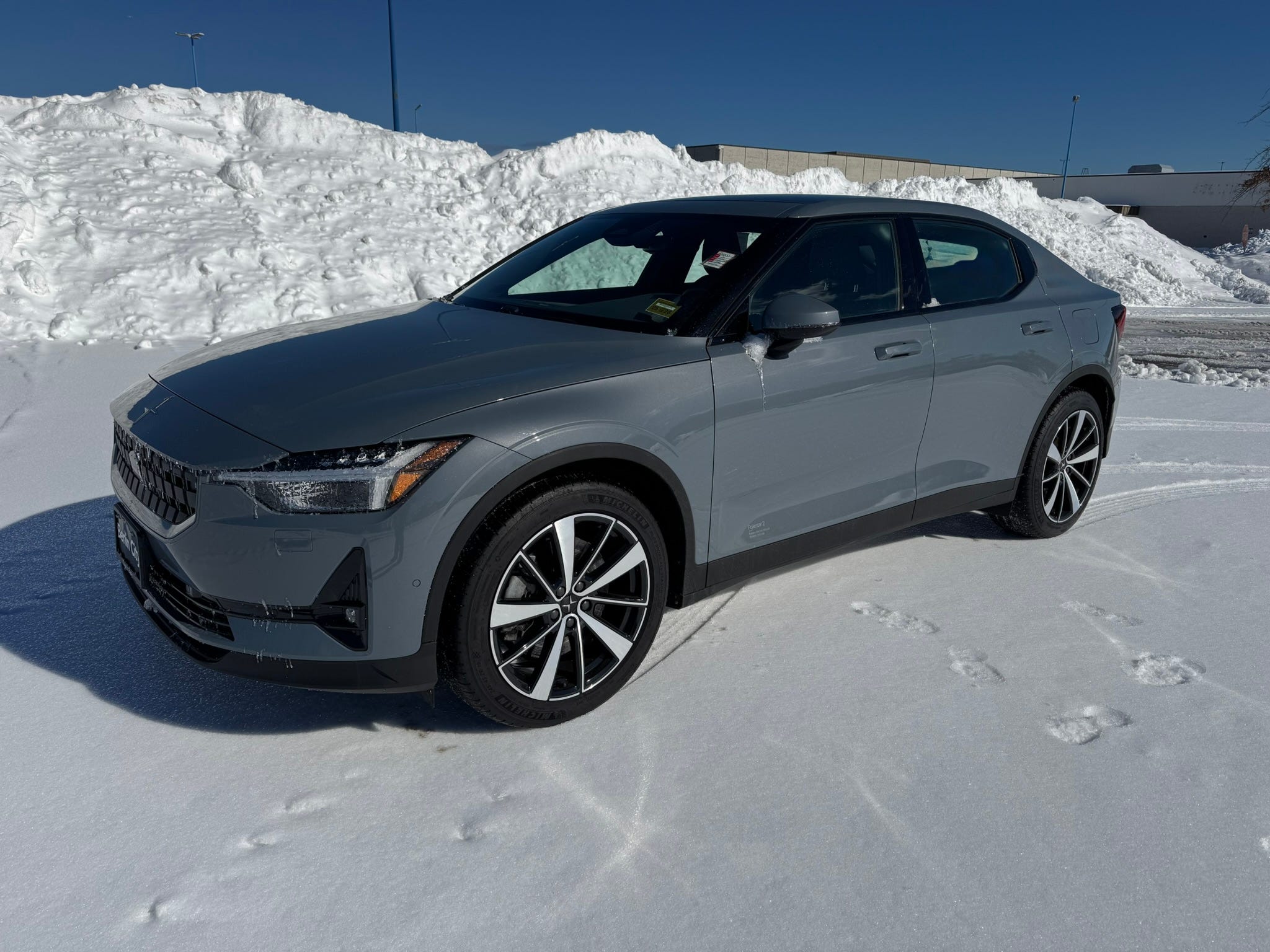
I bought my Polestar 2 used and it came with Michelin Pilot Sport 4 All Season tires. The car was from New Jersey and these tires made sense there, but not so much in Maine. They are near their end-of-life, so I’ll be replacing them soon with all-weather tires.
12-Volt Battery
As with any car, an EV uses a 12-volt battery and if it dies, then the car won’t run regardless of how much charge is in the main battery.
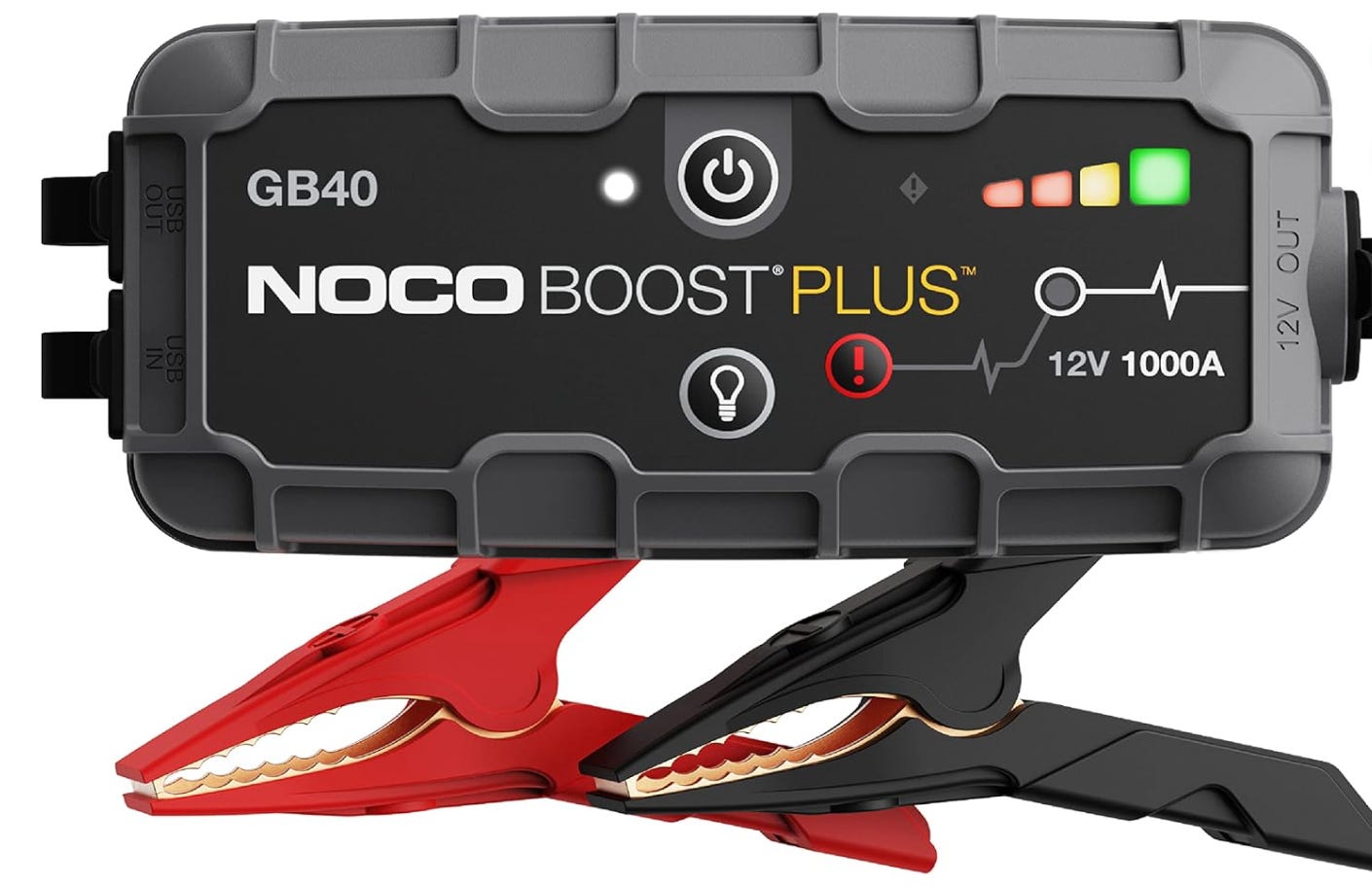
You might want to keep a small jump pack in the car to help boost the 12-volt should it die. This would be especially helpful if you keep your car outside instead of a garage, or if its 12-volt battery is getting old.
I keep the NOCO Boost GB40 in my frunk just in case.
Don’t Let Cold Get You Down — Enjoy Your EV
One thing that is great about having an EV in cold climates is that they provide instant heat. An even bigger benefit is that they continue to provide heat without you having to “idle” the engine.
You can stay warm in an EV for a day or more if you’re parked.
Some EVs, such as the Ioniq models, have a vehicle-to-load feature that lets you use the EV’s main battery to power appliances should you lose power. This could allow you to power a space heater or a refrigerator in an emergency2.
Share your EV cold-weather tips in the comments!
Stats from a Cold Weather EV Drive

It’s been damn cold here in New England lately. After a snowstorm that dumped up to two feet of snow in most of the area early in the week, the temps struggled to get above 15F.
How Much Range Do You Lose in the Winter?

I’ve had my Ioniq for nearly a year so I’ve been able to drive at both summer and winter temperatures. As I drove it last year, the efficiency (and thus the range) continued to go up throughout the spring until peaking in the warm New England summer weather with temperatures between 70F - 90F.
I believe newer Ioniq models can do this. I really don’t understand why all EVs don’t have this as an setting.
Again, this is really something that all EVs should be able to do.
Preconditioning is really about the battery. Warming the cabin is just that and yes many cars can do it remotely or on a schedule. Doesn’t change your advice, just the context.
Great review, Paul. FYI: the section under tires appears to be incomplete.