

On Internet forums, Facebook, Threads and even in-person I often see people repeating the same EV myths and misunderstandings. I want to take a look at some of the common ones and see if I can help shed more light on them.
Obviously EVs are very polarizing right now, especially in the US. But the reality is that EVs are a great option for many people, even if they’ve perhaps been misled to think otherwise. Don’t discount an EV just because you’ve been driving a gas vehicle your entire life!
Myth: EVs Don’t Have Enough Range
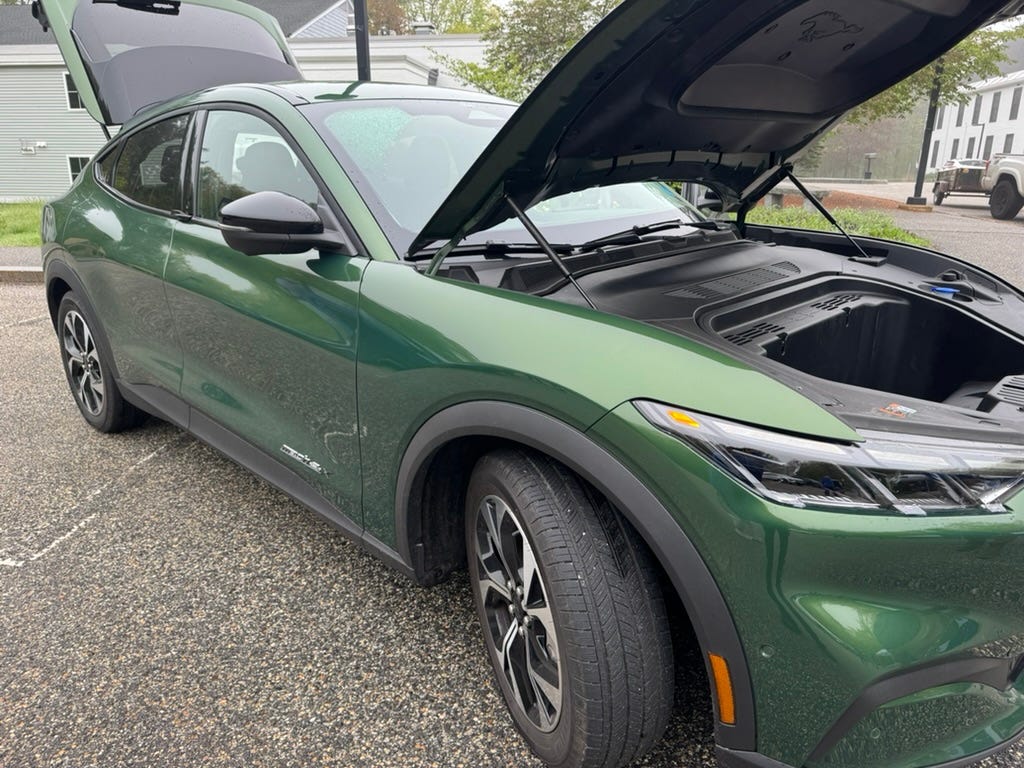
Enough for what? EVs made in the last 6 years or so typically have ranges from about 220 to 400 miles. A gas car may have a range of about 350 to 500 miles.
So yes, a gas vehicle will almost always have more range on a full tank of gas than an EV will have on a full charge. But unless you actually plan to use that entire range in a single trip, it just won’t matter most of the time.
You might fill up the tank of a gas vehicle once or twice a week, waiting outside (maybe in the cold or rain), but with an EV you instead can just plug it in at home each night and the next day it’ll be “full”. Every time you leave your house, you effectively have a full tank. This change is behavior is really nice once you get used to it.
For long road trips that exceed the range of the EV, then you will have to stop at charging stations along the way. Depending on where you live, this can be super-easy because they are readily available or impractical because they are too few. Use something like A Better Route Planner to see if there are enough chargers to support the trip you want to do.
For what it’s worth, I personally know many people that have driven EVs from New York to Florida and the trip was little different than with a gas car.
Myth: EVs Are Worthless in the Winter
EVs does lose range in the winter. That is a fact that is often greatly exaggerated with claims of 50% range loss, vehicles not charging and other silliness.
Yes, EVs do lose range as temperatures drop, just as a gas vehicle does. You’re usually looking at 20-30% drops when the temps get below freezing. That is certainly noticeable, but it is not often all that important, especially if you are able to charge at home or work.
Although the range drop is real, you can’t bring that up without also mentioning the significant advantages that EVs have in the winter, which includes:
Pre-heat in the garage or anywhere
Warms up much more quickly (less than a minute)
Generally better traction in snow due to low center-of-gravity
Myth: Charging Is Too Difficult and Takes Too Long
If you are able to charge at home or work, then you won’t think about charging. You’ll just plug in when you get out and the car will be “full” again when you leave. It may take the car a while to charge, but you won’t notice or care because you’re doing something else. You will definitely appreciate not having to ever go to a gas station again, however.
If you are on a road trip, you will have to stop at DC fast chargers. These charge an EV relatively quickly, but certainly slower than a gas fill-up. However, most EV stops are going to be in the 15 to 30 minute range, which often is pretty close to the time it takes to hit the restroom, grab a snack and stretch your legs.
Unless you’re trying to power through a several hundred mile road trip in as little time as possible, you won’t care much about these extra breaks.
And if this really matters to you, then consider an EV with longer range and rapid DC fast charge times. An EV with a 800-volt design (such as the Ioniq line, but there are others) can charge up in about 18 minutes!
Myth: EVs are Too Expensive
This is still true to some extent, especially in the early days when batteries were expensive, but EVs are now closer to gas car prices than they have ever been. And some manufacturers are releasing less expensive models such as the Chevy Bolt, Nissan Leaf, Ford Maverick, Slate truck and more.
EVs have far fewer mechanical parts and once they reach critical adoption will become much less expensive to manufacture than any gas vehicle.
And used EVs are typically much, much cheaper than an equivalent gas car. In general, used EVs are a tremendous bargain and a great way to dip your tow into the EV world.
Myth: EVs Wear Out Tires Quickly
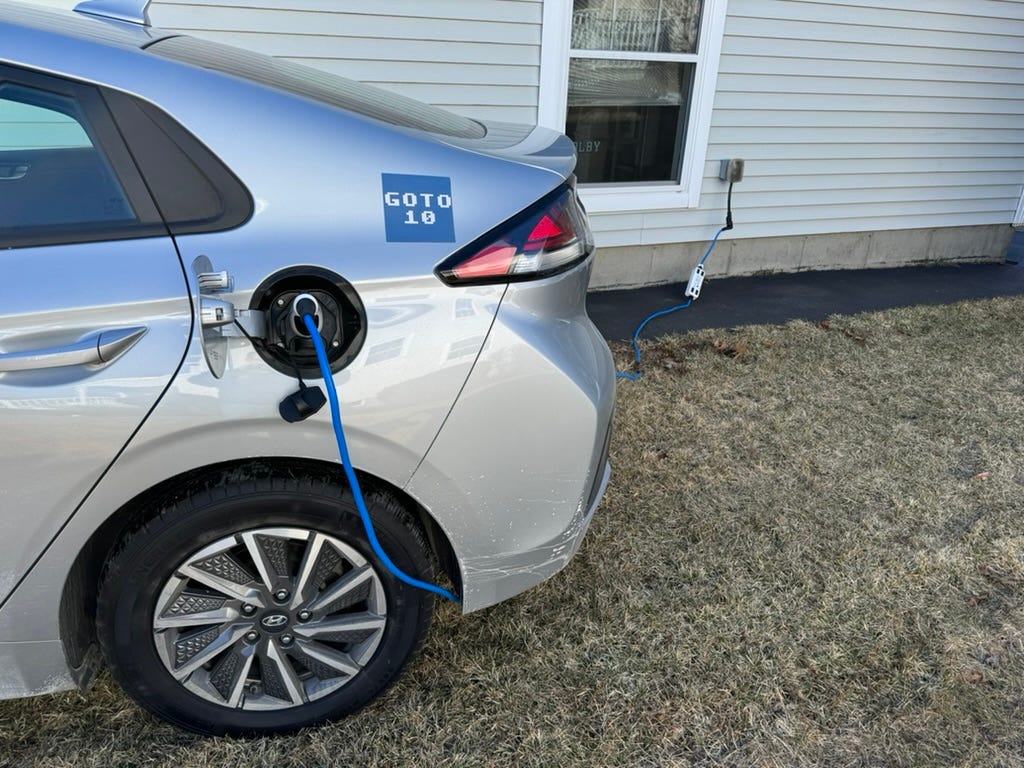
This is usually brought up alongside something about EVs being incredibly heavy and thus wear out tires quickly. This just isn’t true. EVs are often slightly heavier than an equivalent gas car, but it’s not like they are twice as heavy or anything like that. Many giant pick-up trucks and SUVs weigh more than a typical EV.
But still, OEM EV tires are often low-rolling resistance tires that will wear out more quickly, but that doesn’t really have anything to do with weight. It’s just the type of tire the manufacture puts on the EV to maximize range.
Just like the summer tires that can be put on some cars to improve performance, OEM tires usually don’t last long regardless of whether they are on a gas vehicle or an EV.
But here’s the thing: you can put any tire you want on an EV. A set of Michelin CrossClimate 2 tires on an EV will last about the same as the do on any vehicle.
Myth: EVs Are Boring to Drive
Sure, if you are one of the less than 1% of drivers that still drives a vehicle with a manual transmission then you will likely find an EV boring, just as you would find any gas vehicle with an automatic transmission boring.
But EVs have a trick up their sleeve: all their horsepower and torque is available immediately. You don’t have to wait for the engine to reach an appropriate RPM before all the power is available.
For the average driver that is used to driving a bog-standard truck or SUV, an EV will, without a doubt, be much more fun to drive because it is faster and quieter than a gas vehicle.
EVs Are Less Repairable
You can make this statement about any new vehicle. Manufacturers are constantly making things less repairable, which is why many states are enacting “right to repair” laws.
But if you take a step back, in a gas vehicle the thing that most often needs a repair of some kind is the engine. However, an EV does not have an engine. It has sealed electric motors. They are not repairable because they don’t need repairing. An electric motor typically has about 20 to 25 moving parts while a gas engine can have over 2000 moving parts!
Other things you may need to repair (or service), such as brakes, tires or fluids are the same in an EV as they are in any other vehicle. Well, except for the fact that EVs, because of regenerative braking, don’t use the brake pads nearly as much. Many EV drivers report that they can get to 100,000 miles before the brake pads need replacement.
Myth: Hybrids Are Better
People that have an irrational fear of range often like to say that hybrids are better. And certainly that is true if you need 600 miles or more of range. A hybrid typically has a low-power engine combined with a small electric motor and a tiny battery.
But hybrids bring with them the maintenance of a gas engine alongside a small battery and an overall more complex drive system that has to know when to switch between gas and electric.
Because of its improved efficiency, a hybrid is certainly better than a standard gas vehicle. But it is not always be a better choice over a pure EV.
Myth: EVs are Worse for the Environment
This is perhaps the biggest myth of them all. The only thing in an EV that uses any significant resources are some of the raw materials for the battery. But unlike a gas vehicle that literally burns and uses up gasoline, which cannot be replaced, the battery can be recharged for many, many years.
Plus, the battery materials do not get used up. They may wear out over (a long) time, but they can be nearly 100% recycled, much like the regular 12-volt lead acid batteries that are used by all vehicles.
The batteries are also charged using electricity which is created from power plants that are always far more efficient than any gas engine. And to top it off, EVs can even be charged by renewable energy sources such as solar, wind and hydro, something that you cannot do at all with a gas vehicle.
And don’t forget the immediately improvement to air and noise pollution in cities. EVs do not spit out noxious fumes and noise while idling in traffic.
Myth: EVs Have Crippling Depreciation
Yes, currently new EVs do depreciate much more than an equivalent gas vehicle. This is mostly because of many of the myths I’m trying to debunk in this article.
For now that means you should probably only lease new EVs rather than buy them.
But that high depreciation does have a benefit: used EVs are much cheaper to buy. I often recommend a used EV as a great, easy way to join the EV world. I have actually purchased two used EVs in the last couple years. The value for the dollar is tremendous.
Myth: The Battery Will Wear Out and Need to Be Replaced After A Few Years At Enormous Expense
This myth had some truth to it when talking about some of the very early EVs, such as the first generation Nissan Leaf. But today, it is completely false.
Nearly any study you can find today says that EV batteries will outlast the vehicle itself. In fact, all manufacturers provide, at least, an 8-year warranty on the battery. There is no manufacturer that warrants a gas engine for that long.
If for some reason you have an EV that is out of warranty and has a battery failure, then it’s not like you have to go out and buy a brand-new battery for it. Many EVs can have their battery repaired by replacing or updating any faulty cells.
An EV battery is not a single battery. It consists of hundreds of smaller battery cells that are all linked together. Swapping out a few bad battery cells is much cheaper.
Plus, like there is with engines, there are sources of used batteries that can be swapped in, usually much easier than doing any sort of engine replacement. As EVs become more prevalent, so will availability of used batteries.
And as EVs age, there will be a market for battery refurbishing, providing yet another way to keep an EV running for a long time.
Myth: EVs Can’t Tow Trailers
As mentioned earlier, EVs provide all their horsepower and torque immediately. That means they are actually great for towing with the ability to pull lots of weight with smooth power delivery.
Of course, the range will be dramatically reduced when towing, perhaps as much as 50%. But that matches what I’ve seen with gas vehicles as well. I have owned a Toyota Tacoma in the past and it went from about 19mpg to 9mpg when towing our camper.
The more annoying thing about towing with an EV is that most EV charging stations are not designed to pull through, so you may find you have to unhook the trailer in order to connect to the charger. That would definitely be annoying.
But like with anything regarding range, unless you are exceeding the available range in a single trip then this won’t matter.
Still, I probably would not recommend an EV for towing a trailer or camper across the country.
Myth: Government Can Disable Your Car
This is just crazy conspiracy nonsense. And even if it were true, it has nothing to do with EVs. Gas cars have just as much electronics and online communication as any EV so they would be just as susceptible to this insanity.
Wrap
Even though I think I’ve rebuked or explained the myths I commonly hear, that does not mean that EVs are for everyone.
There are plenty of situations where a gas vehicle makes more sense than an EV, the most obvious one being that if you do not have access to AC charging at home or at work, then it will be more of a hassle to own an EV.
But consider the early days of gas vehicles. Until gas stations became prevalent, the same concerns about refueling existed. Eventually EV charging stations will be commonplace and people will no longer worry about how to charge an EV.
And battery technology will continue to improve! Today’s EVs are much more efficient than gas vehicles, but they are using the equivalent of a 3 gallon gas tank. An EV battery that could contain the energy from just 10 gallons of gas would be able to go 1000 miles on a charge! Don’t discount this possibility. After all, cars in the 1960s typically got around 12.5mpg. Even with a large 25 gallon tank, that means they only had ranges of about 300 miles. Technology improved significantly over time for gas vehicles, and has largely plateaued, but EVs still have lots of room for big improvements.
It’s absolutely true that an EV might not be right for you right now. But make that decision based on facts and not on misconceptions and lies that have been spread by others.
If you’re looking for EV advice, you might want to consider one of our Personal EV Advisory sessions. We can answer your specific EV questions to help you make an informed decision.
What EV myths did I miss? What ones did I not address to your satisfaction? Leave a comment!
Thank you Paul for wharing this is a fantastic breakdown of the mental shifts required to live with EV. I recently moved to China and bought a full EV, and your point about charging habits mirrors my daily life perfectly.